Friday, 11 August 2017

Why Yesterday’s Decline Wasn’t Just About North Korea, August 11, 2017

The Sevens Report is everything you need to know about the markets in your inbox by 7am, in 7 minutes or less. Start your free two-week trial today and see what a difference the Sevens Report can make.
Why yesterday's decline wasn't just about North Korea

Thursday was another risk-off day in the currency and bond markets thanks to North Korea, but there were some underwhelming economic reports that shouldn’t be missed, either. The Dollar Index fell 0.09% and never strayed too far from unchanged, in part due to the looming CPI report out this morning.

Starting with the obvious, North Korean angst again kept a lid on most currencies and pushed the yen higher, in classic risk-off trade (although importantly, the moves were mild and currencies and bonds did not confirm the angst in stocks).

However, beyond North Korea there was important economic data that did also impact currencies, and again I maintain that unless we get a big deterioration in the North Korea situation the data remains more important for the remainder than the geopolitical landscape.

First, US PPI was soft, declining for the first time in months and again reinforcing the idea of slowing inflation. Now, PPI isn’t as important to the Fed or markets as CPI, but the bottom line is that if we are in (or approaching) an economic reflation, we shouldn’t see these types of underwhelming inflation reports.

That soft PPI weighed slightly on the dollar and bond yields, although again it was largely overshadowed from a market standpoint by North Korea and today’s CPI.

Looking internationally, the euro was flat all day vs. the dollar amidst little news, while the pound dipped 0.26%. The reason for the pound weakness wasn’t just risk off in the markets. It also was due to an underwhelming Industrial Production report. While the headline number beat estimates (0.5% vs. (E) 0.2%), the manufacturing sub-component was flat vs. (E) 0.2%. That was why the pound dipped back below 1.30 vs. the dollar.

The big gainer vs. the dollar yesterday was, again, the yen, which rallied 0.55% on a standard risk-off move. Economic data in Japan yesterday was, at best, mixed, but the yen isn’t trading off data right now… it’s trading off sentiment. And, the North Korea news is causing a flight to safety, and that means higher yen, higher Treasuries and, for now, higher gold.

Turning to bonds, Treasuries rallied as the 10 year rose 0.11% and the 10-year yield fell below support at 2.22%, although that drop happened into the close.

Bottom line, this flare up in North Korea has put the 10-year yield at a critical technical crossroads. If CPI is light this morning, the 10-year yield will likely drop below 2.20%. At that point, a test of the 2017 lows certainly isn’t out of the question. And, we’d find that disconcerting for multiple reasons, chief of which because it would imply too low inflation and largely destroy the chances for a reflationary rally in stocks in 2017.

We maintain that an economic reflation (higher growth, higher inflation, higher rates) is the only path to a sustainable medium- and long-term rally. While it may cause more of a decline short term, the medium- and longer-term investor in us is hoping for a strong CPI report later today. Unfortunately, I have a sneaking suspicion I will be disappointed. I hope I’m wrong.

Time is money. Spend more time making money and less time researching markets every day. Subscribe to the 7sReport.com.

The post Why Yesterday’s Decline Wasn’t Just About North Korea, August 11, 2017 appeared first on Sevens Report.


source https://sevensreport.com/yesterdays-decline-wasnt-just-north-korea-august-11-2017/

Tuesday, 8 August 2017

Why the Phillips Curve Matters to You, August 8, 2017

The Sevens Report is everything you need to know about the markets in your inbox by 7am, in 7 minutes or less. Start your free two-week trial today and see what a difference the Sevens Report can make.

Pushing unemployment lower should, eventually, cause inflation—unless this entire theory (upon which most of monetary policy is based) is incorrect.

Pushing unemployment lower should, eventually, cause inflation—unless this entire theory (upon which most of monetary policy is based) is incorrect.

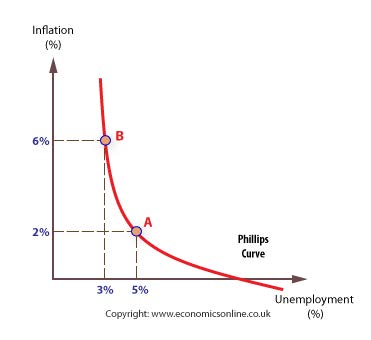
The Phillips curve is a term you’re likely seeing and hearing more recently than at any time previously in your career (regardless of how long it is). The reason the Phillips curve is being discussed so much is simple: There’s a growing school of thought that thinks the Phillips curve is broken, and if that’s the case, then the Fed and other central banks may be largely powerless to spur inflation (which is a potential negative for the broad markets).

Before we get into this issue, though, first lets get a bit of background on the Phillips curve. Basically, the Phillips curve is just a graph of this simple idea: Low unemployment creates higher inflation.

From a commonsense standpoint, it is logical. Less available workers and robust business activity (so low supply and high demand for workers) will cause salaries (the “price” of a worker) to rise, and that in turn will flow through to the entire economy and spur price inflation.

So, put simply, the Phillips curve says low unemployment will spur inflation. And, this idea has been the cornerstone of Fed policy for decades and largely explains the Fed’s strategy post financial crisis.

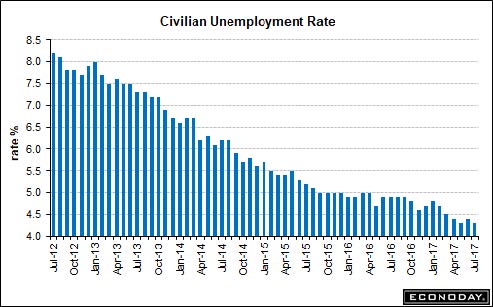
Plunging unemployment: At some point, this must create inflation, or at least that’s what Yellen believes.

Plunging unemployment: At some point, this must create inflation, or at least that’s what Yellen believes.

But, there’s a small problem: It doesn’t appear to be working in today’s economy, as historically low unemployment is failing to spur inflation.

Now, this may seem like a theoretical, academic conversation, but it has real, near-term market consequences.

For instance, the entire mid-July rally in stocks came because the Fed began to note low inflation more than low unemployment.

That caused the decline in Treasury yields and exacerbated the drop in the dollar—and that helped spur a rally in stocks.

However, that may have changed with Friday’s jobs report. The unemployment rate hit 4.3%, matching a fresh low for this expansion (i.e. since the financial crisis). And, unemployment that low will get the Fed’s attention (at least Yellen’s attention) because while there is a debate about the Phillips curve still being accurate, the bottom line is that the Fed still follows it. At some point, if unemployment continues to drop, the Fed will have to continue with rate increases regardless of what’s happening with inflation.

And, that could have an important impact on returns and performance.

Here’s why: If unemployment grinds towards 4% or below, the Fed will have to get hawkish or either 1) Abandon decades of monetary policy that has largely worked, or 2) Risk a significant rise in inflation down the road (according to the Phillips curve) that would require a sharp, painful increase in interest rates—a move that almost certainly would put the US economy into recession.

The practical investment takeaways are this: (withheld for subscribers of the 7sReport—sign up for your free two-week trial to unlock). 

The post Why the Phillips Curve Matters to You, August 8, 2017 appeared first on Sevens Report.


source https://sevensreport.com/phillips-curve-matters-august-8-2017/

Friday, 4 August 2017

Is the Earnings Rally Losing Steam?

Join hundreds of advisors from huge brokerage firms like Morgan Stanley, Merrill Lynch, Wells Fargo Advisors, Raymond James and more… see if The Sevens Report is right for you with a free two-week trial.

Earnings have been an unsung hero of the 2017 rally, but there are some anecdotal signs that strong earnings may already be fully priced into stocks, leaving a lack of potential positive catalysts given the macro environment.

Now, to be clear, earnings season has been (on the surface) good. From a broad standpoint, the results have pushed expected 2018 S&P 500 EPS slightly higher (to $139) and that’s enough to justify current valuations, taken in the context of a calm macro horizon and still-low bond yields.

However, the market’s reaction to strong earnings is sending some caution signals throughout the investor
community. Specifically, according to a BAML report I read earlier this week, the vast majority of companies who reported a beat on the top line (revenues) and bottom line (earnings) saw virtually no post-earnings rally this quarter. Getting specific, by the published date of the report (earlier this week) 174 S&P 500 companies had beat on the top and bottom line, yet the average gain for those stocks 24 hours after the announcement was… 0%. They were flat. To boot, five days after the results, on average these 174 companies had underperformed the market!

That’s in stark contrast to the 1.6%, 24-hour gain that companies who beat on the revenues and earnings have enjoyed, on average, since 2000.

In fact, the last time we saw this type of post earnings/sales beat non-reaction was Q2 of 2000. It could be random, but that’s not exactly the best reference point.

So, if we’re facing a market that’s fully priced in strong earnings, the important question then becomes, what will spur even more earnings growth?

Potential answers are: 1) A rising tide of economic activity, although that’s not currently happening. Another is 2) A surge in productivity that increases the bottom line. But, productivity growth has been elusive for nearly a decade, and it’s unclear what would suddenly spark a revival. Finally, another candidate is 3) Rising inflation that would allow for price and margin increases. Yet as we know, that’s not exactly threatening right now, either.

Bottom line, earnings have been the unsung hero of this market throughout 2017, but this is a, “What Have You Don’t For Me Lately” market, especially at nearly 18X next year’s earnings. If earnings growth begins to slow and we don’t get any uptick in economic growth or pro-growth policies from Washington, then it’s hard to see what will push this market higher beyond just general momentum (and general momentum may be fading, at least according to the price action in tech). To be clear, the trend in stocks is still higher, but the environment isn’t as benign as sentiment, the VIX or the financial media would have you believe.

Time is money. Spend more time making money and less time researching markets every day—start your free trial of the Sevens Report now.

The post Is the Earnings Rally Losing Steam? appeared first on Sevens Report.


source https://sevensreport.com/earnings-rally-losing-steam/

Thursday, 3 August 2017

Goldilocks Jobs Report Preview, August 3, 2017

Goldilocks Jobs Report Preview: What Will Make the Report too Hot, too Cold, or Just Right?

What a difference a month makes. For June’s jobs report, we were equally worried about a “Too Hot” report sending bond yields materially higher, and a “Too Cold” report implying a loss of momentum in the jobs market. Now, almost all the risks to this July report are skewed towards “Too Cold” given the drop in inflation we’ve seen since early July.

More specifically, even if the jobs report is a blow-outnumber, unless it’s accompanied by a big surge in wages it’s not going to elicit a “hawkish” reaction from the Fed or a spike in Treasury yields. Point being, the risk of the report being “Too Hot” is a lot lower than usual, given the drop in inflation.

Looking at the potential impact of this jobs report on the rally, it’s important realize that the dip in inflation since July has been a bullish catalyst, because economic data has stayed firm. So, low inflation makes the Fed more dovish, but economic growth stays constant, and that’s good for stocks.

However, that equation changes if US economic data starts to follow inflation lower (i.e. a big miss on the jobs number). As a result, the “Too Cold” scenario is the biggest risk for stocks heading into tomorrow’s report.

“Too Hot” Scenario (A December Rate Hike Becomes More Certain)

  • >250k Job Adds, < 4.1% Unemployment, > 2.8% YOY wage increase. A number this hot will refute the lower inflation of July and reintroduce the potential for a “not dovish” Fed. Likely Market Reaction: We should see a powerful re-engagement of the “reflation trade” from June..(withheld for subscribers only—unlock specifics and ETFs by signing up for a free two-week trial).

“Just Right” Scenario (Confirms Expectations of September Balance Sheet Reduction & Likely December Hike)

  • 125k–250k Job Adds, > 4.1% Unemployment Rate, 2.5%-2.8% YOY wage increase. This is the best-case scenario for stocks, as it would reinforce the current expectation of balance sheet reduction in September, and (probably) one more 25-bps rate hike in December. Likely Market Reaction: A knee-jerk, mild stock rally, but how powerful the rally is will depend on…(withheld for subscribers only—unlock specifics and ETFs by signing up for a free two-week trial).

“Too Cold” Scenario (Economic Growth Potentially Stalling)

  • < 100k Job Adds, < 2.5% YOY Wage Gains. If we see a big disappointment in the jobs number and a further softening of wage inflation, that will send bond yields lower, and that would likely weigh on stocks as it will raise concerns about economic growth. Likely Market Reaction: Bonds and gold should surge and…(withheld for subscribers only—unlock specifics and ETFs by signing up for a free two-week trial).`

Bottom Line

From a short-term equity standpoint, the best outcome is for “Just Right” job adds (so between 100k-250k) and “Too Cold” wages (so less than 2.5% yoy). That will likely make the Fed incrementally more “dovish,” and take a December rate hike off the table, although it shouldn’t stay the Balance Sheet Reduction in September.

Beyond the short term, it’s important to remember that an economic reflation is the key to sustainably higher stock prices. For anyone with a medium- or long-term time horizon (so almost all of us), I’d gladly take better growth and higher inflation over falling inflation and stagnant growth, even if it meant some short term stock weakness.

Cut through the noise and understand what’s truly driving markets, as this new political and economic reality evolves. The Sevens Report is the daily market cheat sheet our subscribers use to keep up on markets, seize opportunities, avoid risks and get more assets. Sign up for your free two-week trial today and see the difference 7 minutes can make. 

The post Goldilocks Jobs Report Preview, August 3, 2017 appeared first on Sevens Report.


source https://sevensreport.com/goldilocks-jobs-report-preview-august-3-2017/

Wednesday, 2 August 2017

Are Banks About to Break Out?

Join hundreds of advisors from huge brokerage firms like Morgan Stanley, Merrill Lynch, Wells Fargo Advisors, Raymond James and more… see if The Sevens Report is right for you with a free two-week trial.

Banks were again the highlight, as BKX rose 0.83%, and that pulled the Financials SPDR (XLF) up 0.72%. The bank stock strength came despite the decline in yields, which we think is notable. In fact, over the past several trading days, bank stock performance has decoupled from the daily gyrations of Treasury yields, and we think that potentially signals two important events.

Regardless, this price action in banks is potentially important, because this market must be led higher by either tech or banks/financials. If the former is faltering (and I’m not saying it is), then the latter must assume a leadership role in order for this really to continue.First, it implies bank investors are starting to focus on the value in the sector and on the capital return plans from banks, which could boost total return. Second, it potentially implies that investors aren’t fearing a renewed plunge in Treasury yields (if right, that could be a positive for the markets).

Bottom Line

This remains a market broadly in search of a catalyst, but absent any news, the path of least resistance remains higher, buoyed by an incrementally dovish Fed, solid earnings growth, and ok (if unimpressive) economic data.

Nonetheless, complacency, represented via a low VIX, remains on the rise, and markets are still stretched by any valuation metric. Barring an uptick in economic growth or inflation, it remains unclear what will power stocks materially higher from here. For now, the trend remains higher.

Time is money. Spend more time making money and less time researching markets every day—start your free trial of the Sevens Report now.

The post Are Banks About to Break Out? appeared first on Sevens Report.


source https://sevensreport.com/are-banks-about-to-break-out/